Woman holding a purple ribbon representing overdose prevention.

The primary prevention of substance use requires proactive measures that delay the initial non-medical use of opioid, stimulants, and other drugs before misuse or dependency begins. This includes reducing individual, relational, community, and societal risks associated with substance use, and strengthening protective factors across the same domains. Effective prevention strategies help individuals avoid initiating substance use by building refusal and coping skills, positive relationships, and healthy and supportive environments, ultimately reducing the likelihood of opioid and other substance misuse and related harms. Below, you will find a curated list of resources dedicated to supporting primary prevention efforts and promoting healthy communities.

Primary Prevention Resources

Websites

Substance Abuse and Mental Health Services Administration (SAMHSA)

SAMHSA offers a wealth of resources for practitioners, including treatment guidelines, training materials, and publications specific to opioid use disorder. Their website provides access to evidence-based practices, treatment guidelines, and clinical tools.

Join Together Northern Nevada

Join Together Northern Nevada (JTNN) is a coalition based in Northern Nevada whose mission is to create a healthy drug-free community by building successful partnerships to support prevention education and outreach. JTNN keeps an updated resource list for Washoe County students, staff, and families.

PACT Coalition

The PACT Coalition seeks to empower Southern Nevada with the resources to prevent substance misuse for all ages and promote recovery through culturally competent advocacy, education, stigma reduction, support, and outreach. A diverse cross-section of community leadership is represented by the PACT Coalition that will work together to ensure a sustainable future and a healthier community. PACT Coalition keeps an updated resource list for Southern Nevada.

Prevention Technology Transfer Center (PTTC) Network

The Prevention Technology Transfer Center (PTTC) Network works to improve implementation and delivery of effective substance use prevention interventions, and provide training and technical assistance services to the substance misuse prevention field.  

HEAL Prevention

The NIH HEAL Initiative® is an NIH-wide effort to improve prevention and treatment strategies for opioid misuse and addiction and to enhance pain management.​

Strategic Prevention Technical Assistance Center (SPTAC)

SAMHSA’s SPTAC is a national training and technical assistance system dedicated to preventing substance use in communities nationwide through the application of evidence-informed programs and policies.

Tools & Resources

This guide was designed for substance misuse prevention practitioners to help them better understand and access online registries for evidence-based programs, practices, and policies (EBPPPs) for substance misuse. These registries are websites that assess evaluations of behavioral health programs and rate their effectiveness using research evidence. They provide prevention practitioners with the information they need to select the programs, practices, and policies that best fit the needs of their communities.
This workbook was designed to help prevention teams organize key information about potential programs, practices, and policies (i.e., "interventions") to aid in the selection of "best fit" interventions for their communities by applying SAMHSA's 3 criteria: Conceptual Fit, Practical Fit, and Evidence of Effectiveness.
This toolkit translates the science of prevention into simple strategies parents and caregivers can incorporate into busy daily lives -- to do what we can to protect our kids from developing an addiction later in life.
The resources below were created by the PTTC Network to assist prevention professionals as they transition to delivering services and programming from face-to-face to virtual settings. Select the title of a resource to be redirected to view or download that resource. Additional resources will be added to this page as they are developed by our Network.
This tool educates prevention professionals about Adverse Childhood Experiences (ACEs), including what ACEs are, their prevalence, their impact on substance use and other behavioral health outcomes, and how to integrate addressing them into existing prevention.
This guide offers parents the information they need to raise children who understand the risks of substance use. This guide includes an overview of substance use among children, youth, and young adults; descriptions of substances young people may use; a look at risk factors that may make children, youth, and young adults try alcohol, tobacco, or other drugs—and protective factors that help offset those risks; age-specific suggestions for how to talk to young people about alcohol, tobacco, and other drugs; and tips on what parents can do if they suspect their child is using alcohol, tobacco, or other drugs. The guide, “Growing Up Drug-Free: A Parent’s Guide to Prevention,” was funded by the U.S. Department of Justice, Drug Enforcement Administration and U.S. Department of Education, Office of Safe and Supportive Schools.

Posters & Infographics

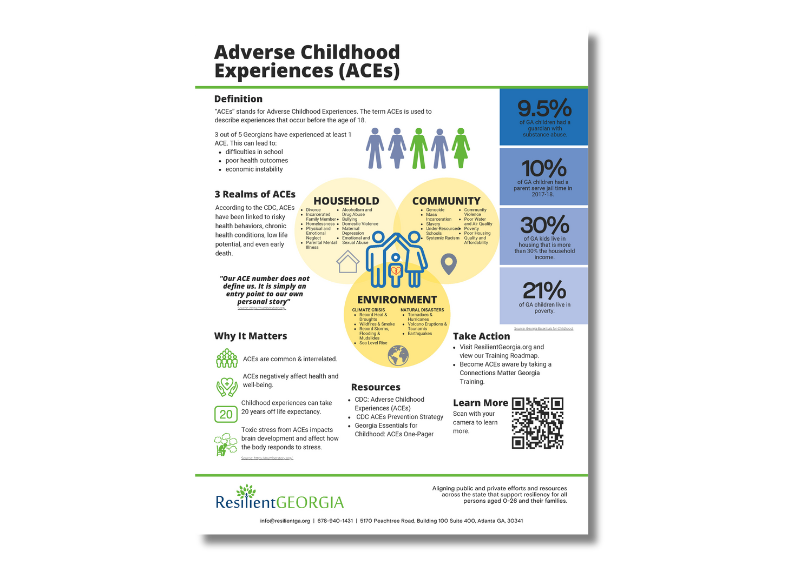
Printable educational cards on Adverse Childhood Experiences, trauma, brain development, and care.

ACEs, Resilience, Toxic Stress Concept Cards
A printable set of educational cards from Resilient Georgia covering ACEs, toxic stress, brain development, resilience, and trauma-informed care, with practical guidance for families and providers.
Download Resource
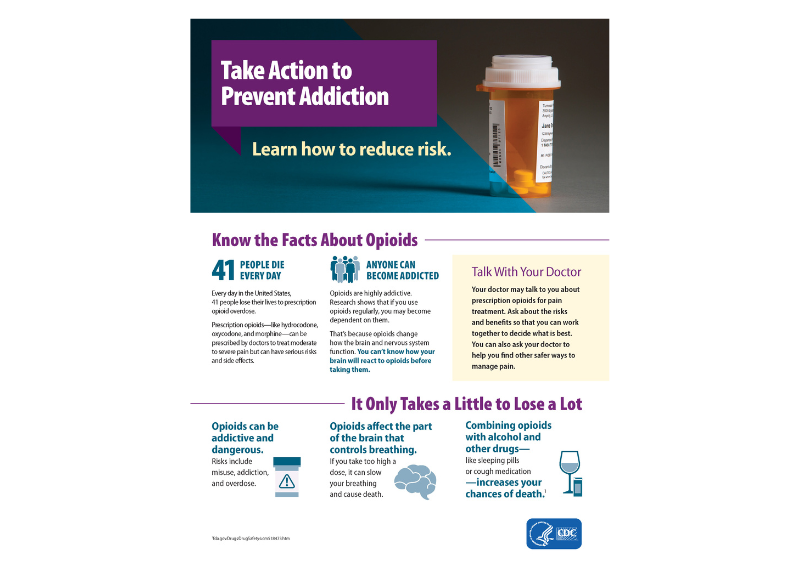
Take Action to Prevent Addiction Learn How to Reduce Risk Infographic.

Prevent Addiction Fact Sheet

This face sheet contains information for patients about preventing opioid addiction.
Download the Fact Sheet

Publications

More resources will be added soon, please check back.

Webinars & Online Learning

Current News & Research

The role of healthcare professionals in opioid addiction prevention

Mayo Clinic. (2024, January 17). The role of healthcare professionals in opioid addiction prevention. Mayo Clinic. https://www.mayoclinic.org/Mayo Clinic. (2024, January 17). The role of healthcare professionals in opioid addiction prevention. Mayo Clinic. https://www.mayoclinic.org/