Nutrition plays a critical but often overlooked role in recovery from opioid use disorder (OUD) and stimulant use disorder. Opioids and stimulants disrupt the body’s ability to absorb and use essential nutrients, often leading to significant deficiencies in vitamins, minerals, and macronutrients necessary for brain function, mood regulation, and physical health. These deficiencies can intensify cravings, increase the risk of relapse, and worsen conditions like depression and anxiety that often occur alongside substance use.
The gut-brain connection is particularly relevant in OUD recovery, as opioid use affects the gastrointestinal system and can impair the nutrient absorption and brain chemical production that support emotional well-being. Stimulant use often suppresses appetite, leading to malnutrition and disordered eating patterns that can persist into recovery. Addressing nutritional needs alongside treatment is not supplemental care, it is an essential part of whole-person recovery. The resources below offer practical guidance for providers and people in recovery on integrating nutrition support into substance use treatment and recovery planning.
Nutrition Resources
Websites
Diet, Nutrition, and Substance Use Disorder
Healthy Living, Sustainable Recovery Resource Center
Tools & Resources
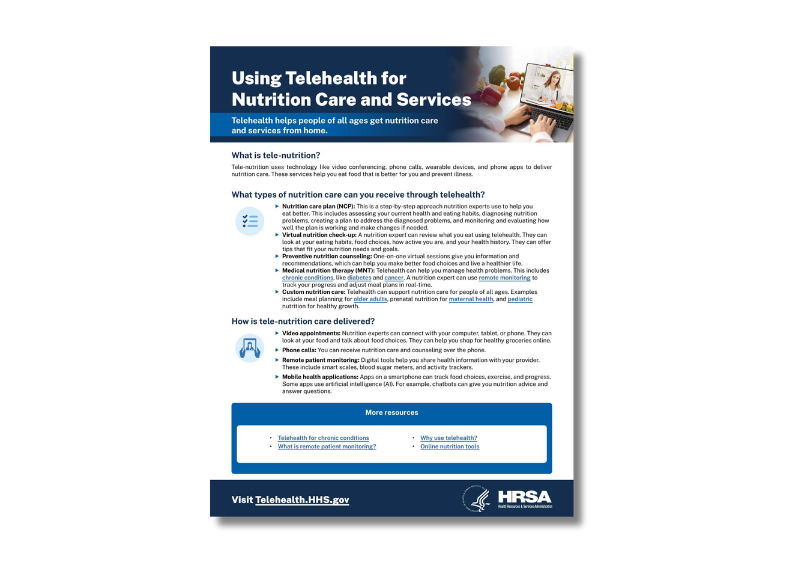
Patient Resource: How to Use Telehealth to Improve Eating Habits and Nutrition
Telehealth for Nutrition Care and Services Guide
Posters & Infographics